
Learn:
Net Prolongation Website



A proven long-term, life-extending therapy for advanced heart failure patients.

Left ventricular assist devices (LVADs) have evolved significantly since 2001, dramatically improving outcomes for patients who use them.
Additionally, today’s LVADs are indicated for a range of patient profiles, providing both short- and long-term mechanical circulatory support (MCS).
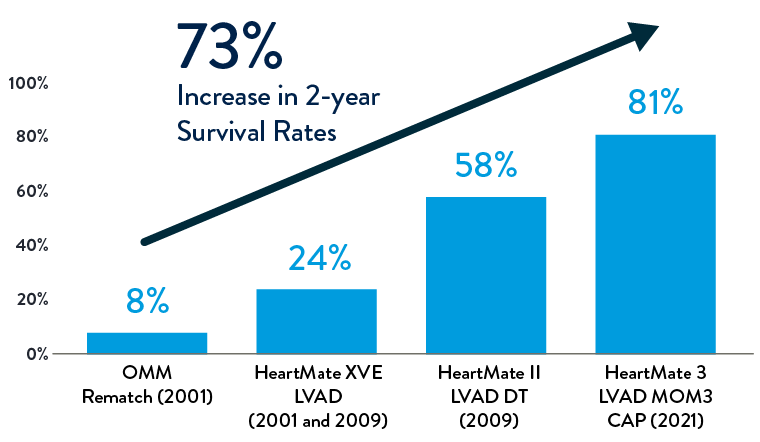
See how HeartMate 3 LVAD offers more ways to support patients with advanced refractory left ventricular heart failure.
For patients <50 awaiting heart transplantation, HeartMate 3 LVAD can serve as a complementary therapy that prolongs meaningful life and optimizes pre-transplant outcomes.7

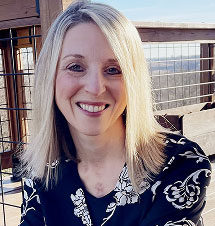
Male, age 29
At age 25, Jermayne was diagnosed with chronic myocarditis (viral cardiomyopathy) and classified as NYHA Class IV heart failure, with an ejection fraction of just 10-15%. He experienced repeated hospital readmissions for shortness of breath and was initially treated for pneumonia before being referred for advanced heart failure care.
After evaluation, Jermayne received a HeartMate 3 LVAD as a bridge to transplant in April 2019. He was discharged 17 days later, ready to begin a new chapter.
Since surgery, Jermayne married his wife Keima, welcomed a child, and started a business with his dad. Now working as a chef and food truck owner in Columbus, Ohio, he also teaches children how to cook.

For certain patients suffering from heart failure for a specific reason, temporary support from a HeartMate 3 LVAD can give the heart time to recover its ability to pump effectively.

Female, age 42
At age 39, Loree presented to urgent care with shortness of breath and an elevated heart rate. Despite no prior history of heart problems, Loree was quickly diagnosed with myocarditis and viral cardiomyopathy, her heart failure noted as NYHF Class IV with an ejection fraction of only 5-10%.
After cardiac arrest and unsuccessful attempts with ECMO and two Impella devices, Loree received her LVAD in August 2022. “I decided to have the surgery because I wanted to get home to my kids,” she recalls.
After just one week in the stepdown unit and another in hospital, Loree’s energy and activity levels significantly improved. By February 2023, her heart function had normalized with an ejection fraction of 65%, allowing her to undergo explant and return to NYHF Class I.
Now 42, Loree works full time and lives an active life with her family in Pennsylvania.
LVAD therapy with HeartMate 3 LVAD may be able to give patients with end-stage heart failure time to manage reversible physical conditions or psychosocial factors that temporarily make them ineligible for transplant.8

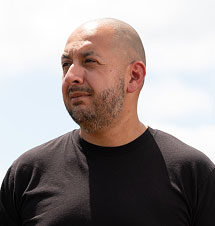
Male, age 41
Diagnosed with congestive heart failure and dilated cardiomyopathy, Rick faced a difficult prognosis. “My local cardiologist told me there wasn’t much he could do for me,” says Rick, “[that] I should go home and enjoy my family and prepare for not waking up.”
But everything changed when Rick was referred to an advanced heart failure clinic. At age 38, weighing 344 pounds, he received his LVAD implantation. Determined to earn a chance at heart transplant, Rick committed to lifestyle changes, losing more than 150 pounds with daily walks, gym sessions, and yardwork. Listed for transplant at 210 pounds in May 2023, he reached 190 pounds by June 2025 and successfully received a new heart at 41.
For advanced heart failure patients who are not candidates for a heart transplant, an LVAD can be permanently implanted with the goal of extending that person’s life — as well as improving their quality of life.1,7

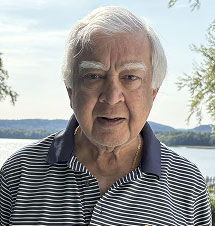
Male, age 79
A retired general surgeon living in New York, Dr. Wiji was diagnosed with congestive heart failure and ischemic heart disease, with an ejection fraction of only 14-16%. Despite undergoing angioplasty in 1999 and an unsuccessful Impella pump procedure in 2022, his condition progressed to NYHF Class IV. After a heart attack in December 2022, he was transferred to Columbia, where he received his LVAD at age 76.
Dr. Wiji credits the HeartMate LVAD with giving him “another lease on life,” allowing him to return to daily activities like exercising, cooking, and spending time with his grandson.
Inotropes can help symptoms in the short term, but are not a life-saving therapy.2, 12
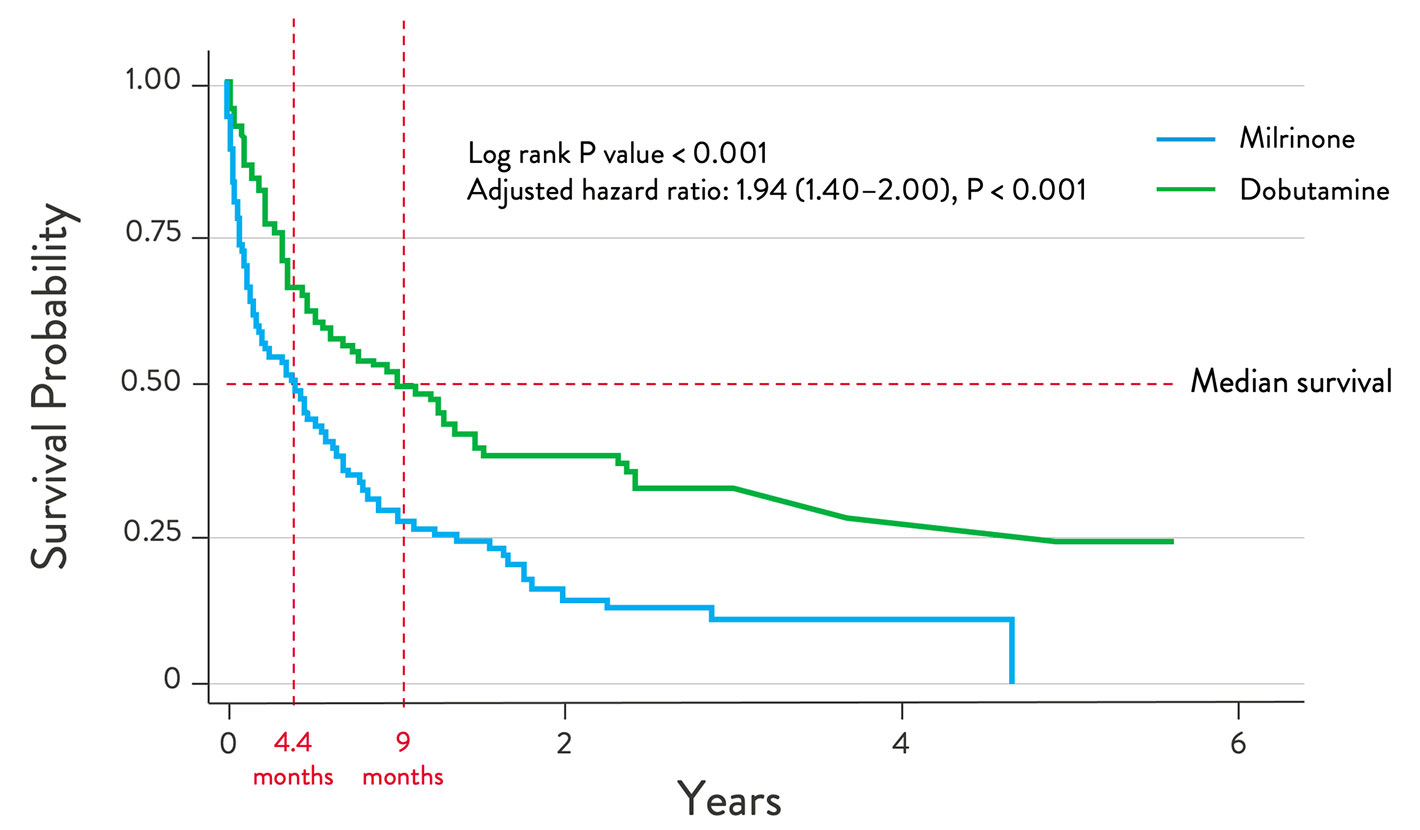
Without an LVAD or transplant, advanced heart failure patients would not be expected to survive beyond 9 months.2, 11,* .
Survival for patients on dobutamine vs milrinone7
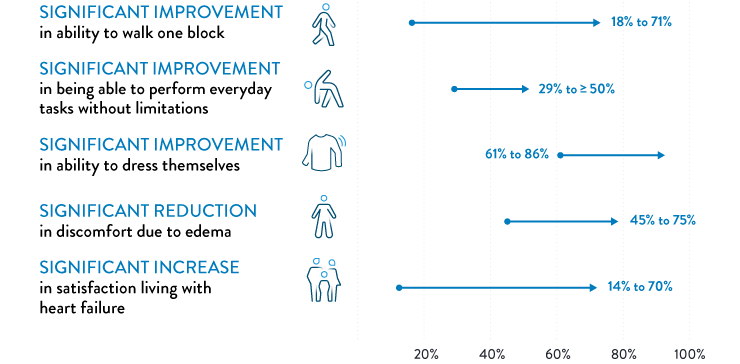
If your patient experiences any of the following, refer them to a heart failure specialist for evaluation for advanced heart failure therapies, including LVAD therapy.
Repetitive hospitalizations for heart failure (2 or more events in a year)

Staircase diuretic requirements over time to maintain clinical stability (e.g., an increase of oral loop diuretics therapy by 50% in the preceding 6 months)

Intolerance to neurohormonal therapy with onset of cardio-renal perturbation

Find a heart failure center for your patients so they can learn more about a HeartMate 3 LVAD.
{distance} miles
Results appear below.
Clinics are listed in order of geographic proximity from the information entered in the locator. Abbott does not endorse any of the clinics on this locator, but merely provides them as a courtesy to patients. Nor does Abbott represent that this is a full list of clinics in a particular location. Though Abbott attempts to regularly update the locator, the locator may not have the latest information regarding the clinic or provider, or availability of product. The clinics are included in the locator because they are certified as a HeartMate LVAD implanting center, have ordered at least one HeartMate LVAD in the last 12 months, and have all HeartMate LVAD device-related equipment required for patient management. The number of orders has been validated; the number of implants has not been validated. This locator includes US clinics only. No clinics or healthcare professionals (HCPs) have paid or received a fee to be listed, but some HCPs within the clinics on this locator may purchase products from Abbott, provide consulting services to Abbott, and/or may have a financial relationship with Abbott. The locator is not meant to be an endorsement for any particular clinic, nor does it represent the qualifications of the HCPs at the clinic. Note that Abbott is a medical device manufacturer and cannot provide medical advice.
For more information about this clinic locator please see our policy. Any information you provide is covered by Abbott’s Privacy Policy.
These testimonials relate an account of an individual’s response to the treatment. The patient’s account is genuine, typical and documented. However, it does not provide any indication, guide, warranty or guarantee as to the response other persons may have to the treatment. Responses to the treatment discussed can and do vary and are specific to the individual patient.
MAT-2600594 v1.0


