


This device is commercially available for use in select international markets. Check the regulatory status in your geography.
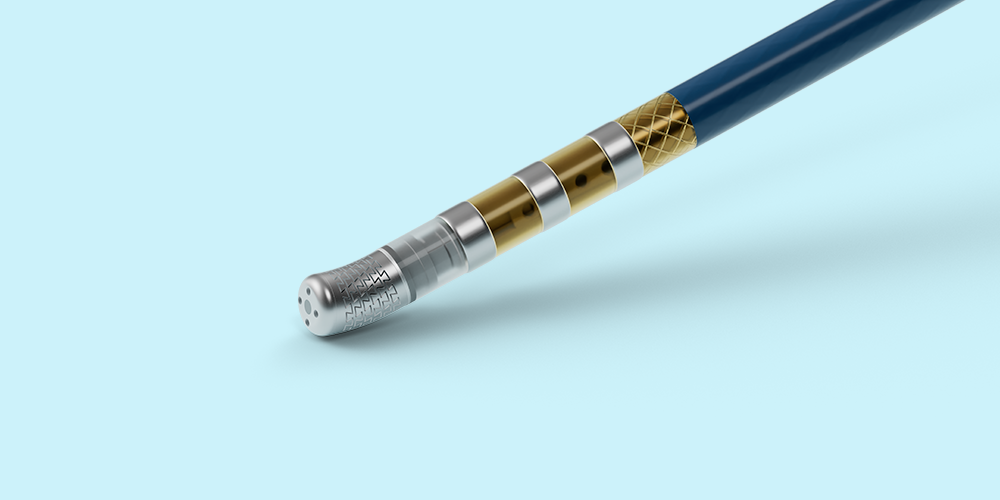
TactiFlex™ Duo Ablation Catheter, Sensor Enabled™
Intentionally built to provide the versatility, precision, and freedom necessary to confidently tailor therapy,1 switch seamlessly between PF and RF energy,1,2 and achieve consistent, predictable lesions3 – every time.
1.7%
Primary safety
event rate4
0
Deaths, esophageal lesions, phrenic injury,
or pulmonary vein
stenosis reported4
92.6%
Freedom from
documented
AF/AFL/AT with standard of care monitoring4
91.7%
Freedom from
repeat ablation4*
Predictability drives confidence
Reproducible durable lesion formation3,5,7,13 supports the efficiency you need.
Achieve fast, transmural lesions, in a single application with reliable depth > 5 mm7,13
1x applications7
%20.png)
Transcend limitations in challenging anatomies* with precise depth and width achieved with PFA controlled lesion stacking13
4x applications13
.png)
Applications in porcine ventricular tissue; confirmed via TTC stain. (n=2 animals for PF 1 x Application, n=3 animals for PF 4 x Application)
2x
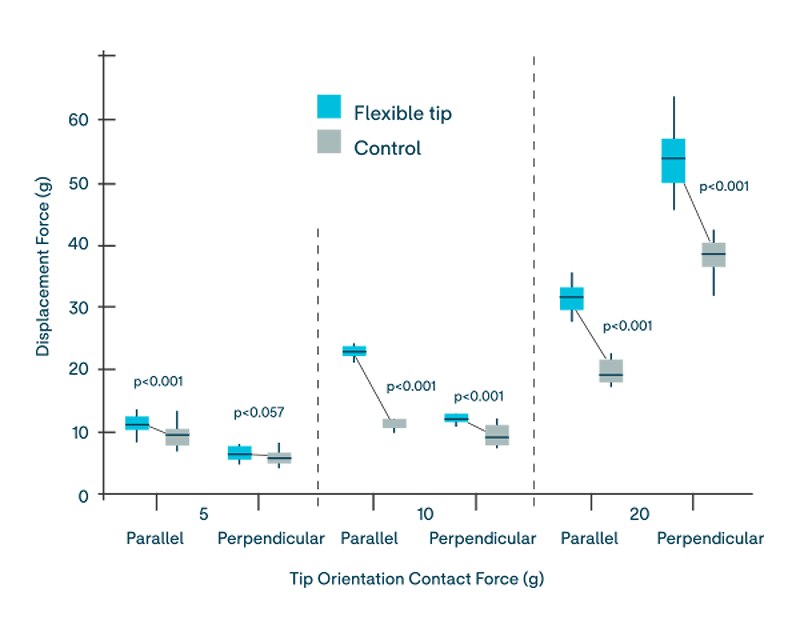
more stable8,9**
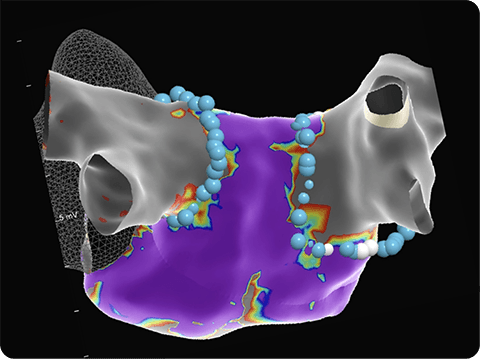
PFA Index (PI) workflow uses real-time tissue response to guide lesion formation and incorporates PI workflow consistency, providing actionable insights to inform ablation procedures based on lesion formation factors.3
Predictive Accuracy: PFA Index (PI)4
Retrospective review of a subset of FlexPulse IDE trial patients demonstrated
84.6%
Freedom from AF/AT/AFL
at 12 months (strict monitoring)
In procedures with
80% of lesions with PI value ≥ 30
90% of lesions with Automark Distance ≤ 6 mm
Built to switch
Break free from one-size-fits-all solutions to tailored energy delivery that adapts to every patient, every procedure, every anatomy1,6,12
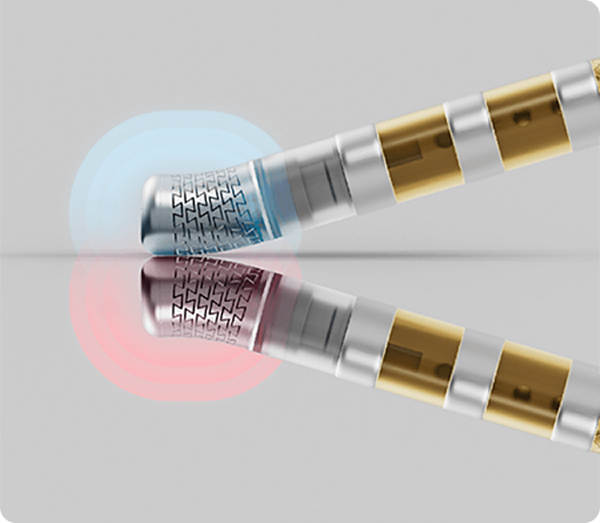
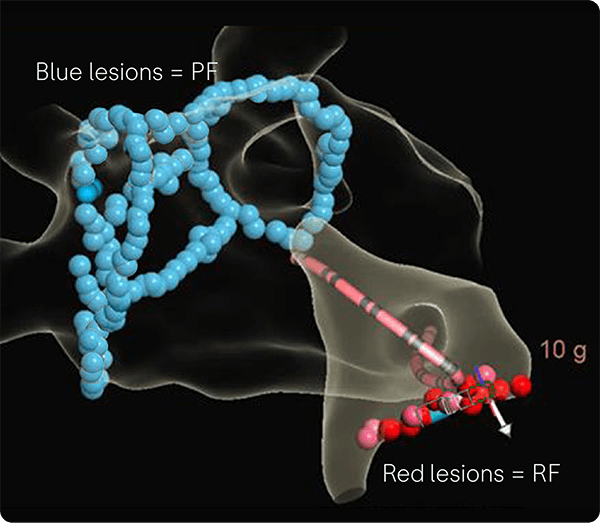
Feel the freedom of choosing the right energy for the right tissue with the ability to seamlessly switch between PF and RF1
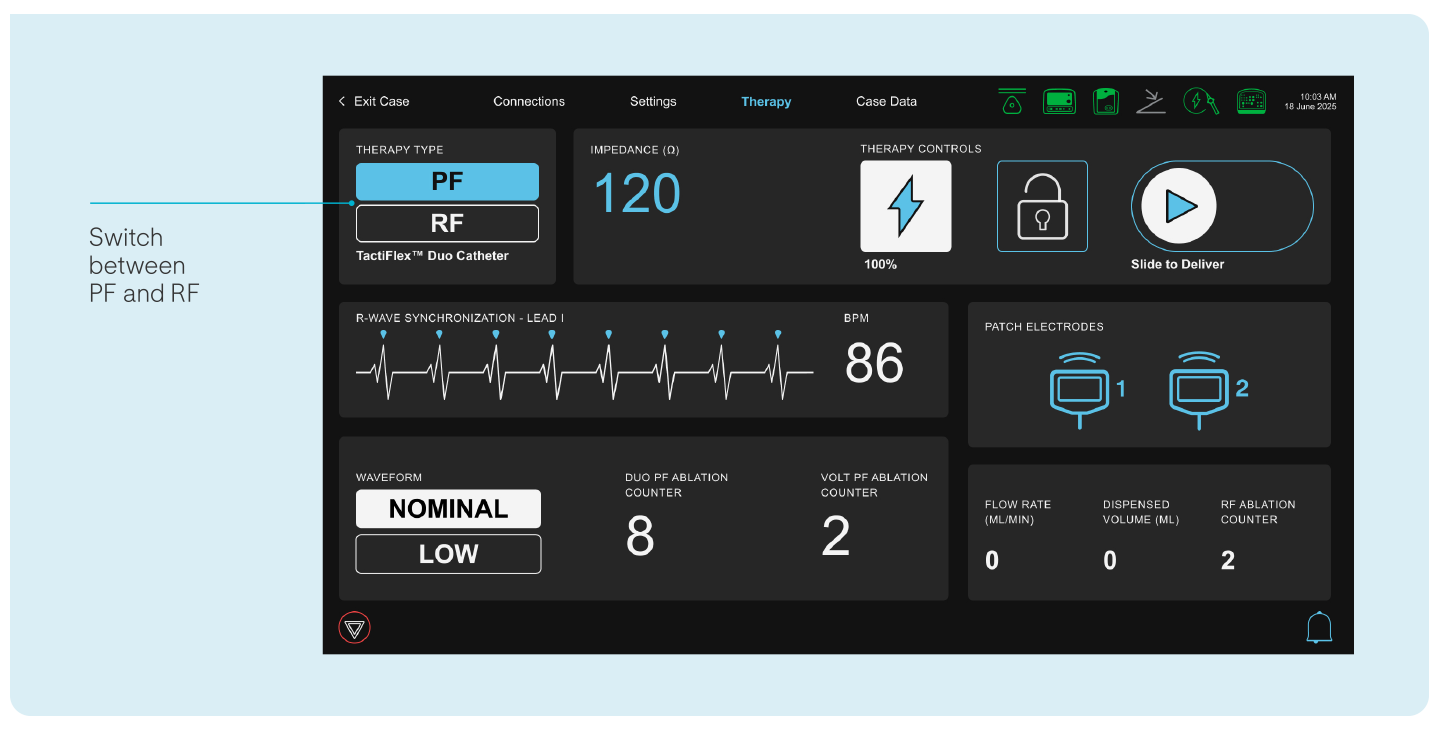
Optimize patient safety and clinical workflow through sedation-flexible waveforms, astutely engineered to minimize nerve and muscle stimulation - with or without general anesthesia10,11
34.7%
used conscious sedation or deep sedation vs. general anesthesia10
144 patients in 21 centers in Australia and Europe
CS/DS workflows, compared to GA showed
 7%
7%
lower procedure time (8.5 min)12
0%
no difference in proportion of cases with none or clinically acceptable skeletal muscle recruitment12
*Freedom from documented AF/AFL/AT recurrence detected by standard of care TTMs, 12-lead ECGs, and Holter monitors.
** Compared to standard solid-tip ablation catheters.
References:
- Sanders, P. et al. (2025, November 13). Beyond Pulmonary Veins: Ablation Trends and Targets with a Novel Flexible-Tip Dual-Energy PF/RF Ablation Catheter [Oral presentation]. Presented by Prash Sanders. Asia Pacific Heart Rhythm Society (APHRS) 2025, Yokohama, Japan.
- Data on file 91062308.
- Friedman, et al. (2025 September) Development of a PFA index to guide energy delivery with a force sensing flexible, irrigated tip catheter [Oral presentation]. ESC 2025, Madrid, Spain.
- Hussein, A., Rackauskas, G.,Sundaram, S., et al. (2026). Safety and effectiveness of a novel dual-energy radiofrequency/pulsed field ablation catheter: 12-month results of the FlexPulse Study. Europace. Advance online publication. https://doi.org/[DOI]
- Koruth J, et al. Acute and chronic pulmonary vein isolation durability and safety assessments of a focal dual-energy, flexible 4mm contact-sensing tip [Poster presentation]. Heart Rhythm Society 2025, San Diego, CA.
- Data on file 91060208
- Mittal et al. Lesion Depth Saturation for Sequential RF and PFA Therapy Using a Dual-Modality Focal Catheter in a Porcine Model for Atrial Application. AF Symposium 2026 Abstract.
- Nair D et al. Catheter Stability Analysis in Ablation of Paroxysmal Atrial Fibrillation: Impact of a Novel Flexible Electrode Tip. HRS Poster 2023.
- Ambrosius N, et al. Flexible, Kerfed Ablation Catheter Tip Provides Superior Stability in a Bench Model APHRS 2018: Abstract Book; 2018, October 17-18; Taipei, Taiwan. Abstract nr 1170.
- Silberbauer J, et al. (2025, April 25) Initial Clinical Experience with the TactiFlex DUO System: Safety and Acute Results of the FOCALFLEX Study [Oral presentation]. Presented by Daniel Scherr. Heart Rhythm Society 2025, San Diego, CA.
- Lo M, et al. (2025, April 25) Acute Results of the FlexPulse IDE Trial [Poster presentation]. Heart Rhythm Society 2025, San Diego, CA.
- Scherr, D. et al. (2025, November). General anesthesia vs. Deep sedation and Conscious Sedation in Subjects Undergoing Pulmonary Vein Isolation with a Novel Flexible-Tip Dual-Energy PF/RF Ablation Catheter [Oral Presentation]. Presented by Daniel Scherr. Asia Pacific Heart Rhythm Society (APHRS) 2025, Yokohama, Japan.
- Koruth, J. S., Killu, A. M., Mittal, L., Loughlin, H., Pipenhagen, C., Fish, J., et al. (2026). PO-FPI-315: Optimizing pulsed field ablation for ventricular tachycardia: Preliminary results using a focal sensor enabled force sensing catheter designed for the EnSite X mapping system [Conference abstract]. Heart Rhythm, 23.
Rx Only. Brief Summary: Prior to using these devices, please review the Instructions for Use for a complete listing of indications, contraindications, warnings, precautions, potential adverse events, and directions for use.
MAT-2631322 v2.0