

AVEIR™ AR Atrial
Leadless Pacemaker
Atrial Leadless Pacemakers - Exclusively from Abbott

Atrial Pacing: Mimicking the Heart's Natural Rhythm for Sinus Node Dysfunction (SND) Patients
Atrial pacing replicates the heart's natural conduction system by stimulating the atrium, ensuring coordinated heart chamber contraction through the AV node and His-Purkinje system. The AVEIR AR Atrial Leadless Pacemaker (LP), a first-of-its-kind technology from Abbott, offers a safe, effective, upgradeable solution for patients with sinus node dysfunction (SND) and normal AV intraventricular conduction systems. Key benefits include:
- Preserving physiological AV conduction for natural heart rhythms1
- Reduced risks of atrial fibrillation, heart failure, and pacing-induced cardiomyopathy2-5
Watch the Video
AVEIR AR Atrial LP Clinical Outcomes6


ELECTRICAL PERFORMANCE SUCCESS RATE AT 3 MONTHS for patients with acceptable atrial device pacing capture threshold (≤ 3 V at 0.4 ms) and sensing amplitude (≥ 1 mV)6,*
- 95.2% 3-month atrial composite success rate with modified sensing criteria (≥ 0.5 mV)7,*
FREEDOM FROM COMPLICATIONS AT 3 MONTHS.6 The inclusion of arrhythmias as a safety endpoint increased the overall incidence of complications compared with other studies of leadless pacemakers, which excluded arrhythmias from the endpoint.
*Multiple imputation used for missing data
Upgradeable System
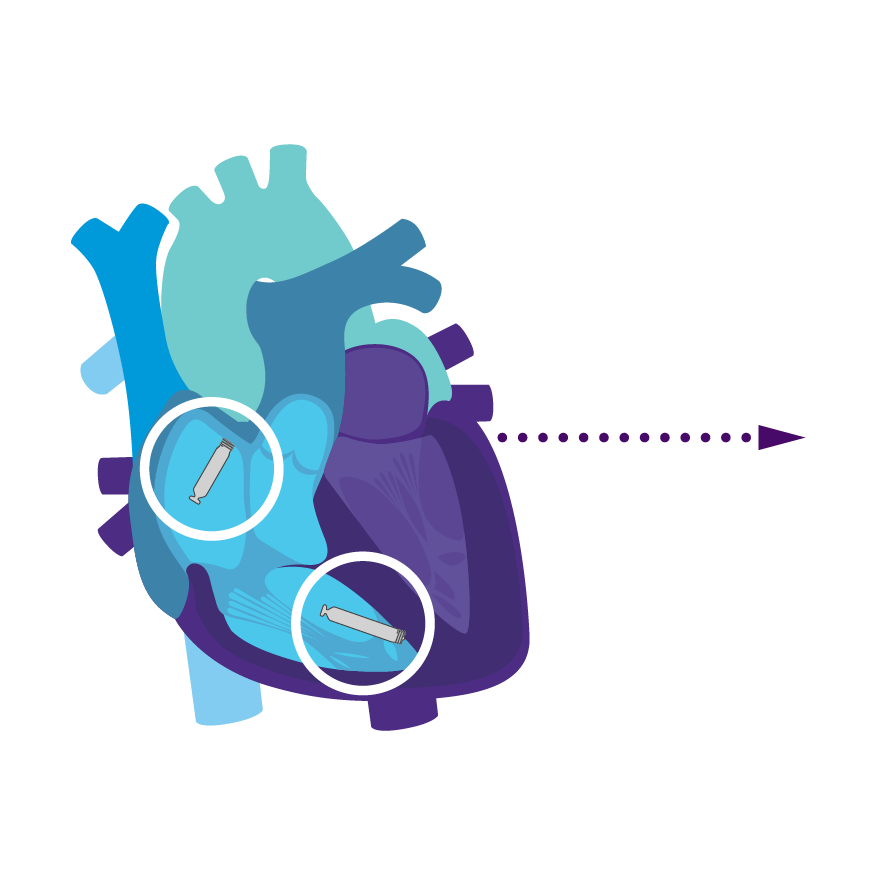
Patient therapy can be tailored by implanting an atrial device alone, or both atrial and ventricular devices together for dual chamber support. The option to upgrade over time allows you to meet your patient’s needs today and adapt to common disease progression later.
Treatment Option 1: Start with the Atrial Device.
Treat atrial arrhythmia and sinus node dysfunction today.
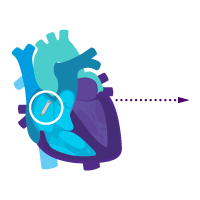
Add a ventricular device for heart block later.
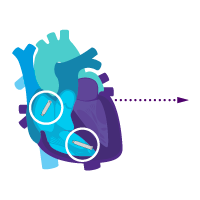
i2i™ communication is enabled.
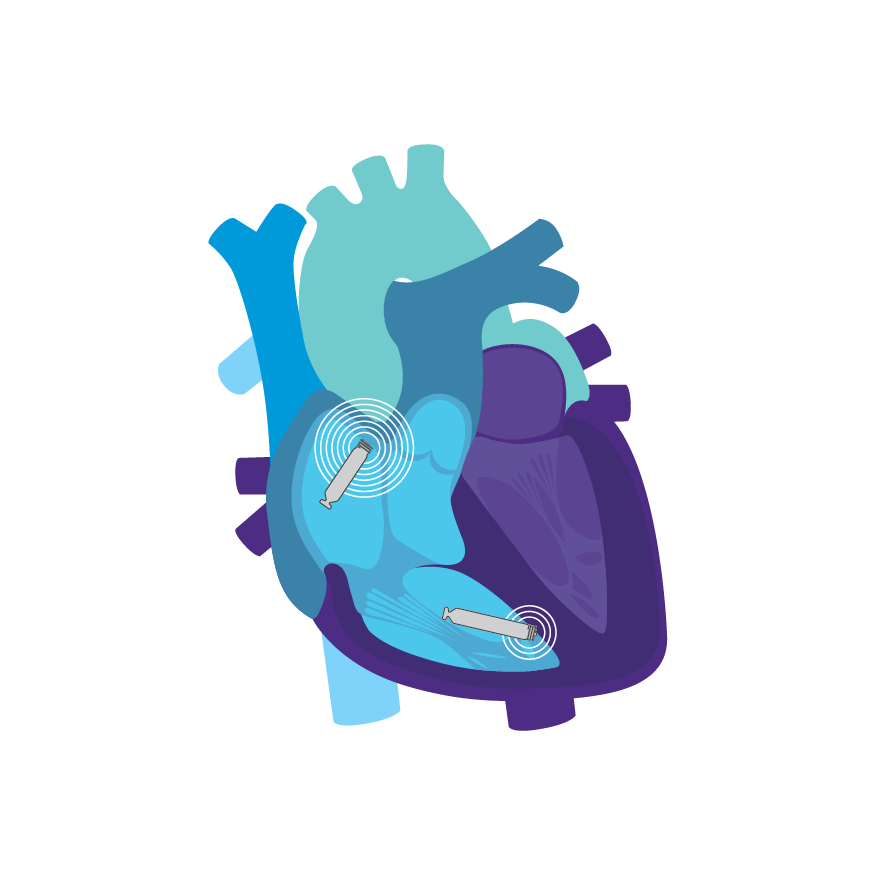
Activate dual chamber pacing therapy DDD(R) via i2i communication.
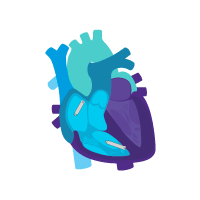
Treatment Option 2: Start with a dual chamber DDD(R) system.
Start with a dual chamber device.
Turn off Beat-to-Beat communications to enable independent single chamber pacing for each device.
Treat SND patients today with AAI(R)+VVI pacing in the case of rare intermittent AV block.†
- Up to 70% increase in atrial device longevity with AAI(R)+VVI versus DDD(R)8,9**
- Minimized/back-up ventricular pacing in the case of rare intermittent AV block
†Note: AAI(R)+VVI mode should not be used in patients without intact AV node conduction or with chronic atrial fibrillation or atrial flutter.
** 1.5 V, 0.4 ms, 50 bpm, 300 ohms, 100% A pacing, 10% V pacing, i2i™ settings = 4 / 4
REFERENCES
***For additional information about specific MR Conditional, including warnings, precautions, adverse conditions to MRI scanning and potential adverse events, please refer to the MRI-Ready Leadless Systems Manual at medical.abbott/manuals or check our MRI-Ready resources at cardiovascular.abbott/mriready
- Rosenqvist M. Atrial pacing for sick sinus syndrome. Clin Cardiol. 1990 Jan;13(1):43-7. doi: 10.1002/clc.4960130108. PMID: 2404646.
- Kim WH, Joung B, Shim J, et al. Long-term outcome of single-chamber atrial pacing compared with dual-chamber pacing in patients with sinus-node dysfunction and intact atrioventricular node conduction. Yonsei Medical Journal. 2010;51(6):832-837. doi: 10.3349/ymj.2010.51.6.832.
- Fored C, Granath F, Gadler F, et al. Atrial vs. dual-chamber cardiac pacing in sinus node disease: a register-based cohort study. Europace. 2008;10(7):825-831. https://doi.org/10.1093/europace/eun118
- Healey JS, Toff WD, Lamas GA, et al. Cardiovascular outcomes with atrial-based pacing compared with ventricular pacing: meta-analysis of randomized trials, using individual patient data. Circulation. 2006;114(1):11-17. doi: 10.1161/CIRCULATIONAHA.105.610303.
- Masumoto H, Ueda Y, Kato R, et al. Long-term clinical performance of AAI pacing in patients with sick sinus syndrome: a comparison with dual-chamber pacing. Europace. 2004;6(5):444-450. doi: 10.1016/j.eupc.2004.05.003.
- Knops, Reinoud E., et al. “A Dual- Chamber Leadless Pacemaker.” New England Journal of Medicine (2023). DOI: 10.1056/ NEJMoa2300080.
- Cantillon, Daniel, et al. (2023, May 19-21). Percutaneous implantation of a dual chamber leadless cardiac pacemaker system with bidirectional communication for atrioventricular synchrony. [Conference presentation]. Heart Rhythm Society 2023, New Orleans, USA.
- AVEIR Leadless Pacemakers and Delivery Catheter IFU. ARTEN600361109.
- Abbott. Data on file, Supplemental Longevity Assessments of AVEIR DR System. Item: 91101444.



MAT-2617160 v2.0