


‘Connection Cards’ Support People Living With Heart Failure
Heart failure changes more than the heart. It can affect independence, relationships, confidence — and mental wellbeing. Many people living with heart failure describe feeling isolated and unsure who they can talk to, especially if they do not want to worry loved ones.
What are Connection Cards?
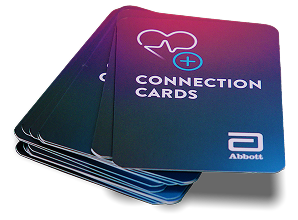
Dealing With Heart Failure is an initiative from Abbott to encourage more open, human conversations about what life with heart failure is really like — including the emotional impact. As part of the campaign, Abbott has created a simple tool to help people have more conversations – Connection Cards.
Our goal is straightforward: help more people feel heard, understood and supported — and give healthcare teams and patient organisations a practical tool to make those conversations easier.
The Scale of the Problem
Heart failure can be a serious, long-term condition with a growing impact on health systems and families. Global estimates suggest around 64 million people live with heart failure worldwide.1
Heart failure affects people of all ages, but it becomes more common as people get older.2
And while heart failure is often talked about in terms of physical symptoms, the emotional impact can be just as real. For example:
Does heart failure contribute to anxiety or depression?
In a large European registry study, around 4 in 10 people with heart failure reported feeling moderate anxiety or depression, and about 1 in 20 reported severe symptoms.3

How common is depression among people with heart failure?
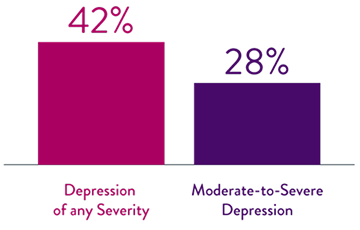
A major review of published studies found that depression is very common in heart failure — estimating 42% for depression of any severity, and 28% for moderate-to-severe depression.4
This impact matters. Anxiety and depression can affect quality of life, day-to-day functioning, and engagement with care and support networks — and they often go unspoken.5
Introducing… Connection Cards
Connection Cards help people start a conversation about living with heart failure.
They are a pack of cards, each containing a question designed to help someone living with heart failure talk about their journey — from diagnosis, to relationships, to emotional wellbeing and resilience.
A pack contains 35 questions and can be used in a hospital setting, at home, or in a patient group — by a clinician, a family member, a friend, or a peer supporter.

Why prompts? Why conversation?
Connection Cards are Abbott’s practical tool to make supportive conversations easier to start, especially for people who find it hard to open up or don’t know another person living with heart failure.
Evidence shows that structured psychological and psychosocial support can improve symptoms of anxiety and depression in cardiovascular populations (including heart failure).6,7
Request packs of Connection Cards
If you are a healthcare professional or a patient organisation and you would like Connection Cards to be made available in your hospital, clinic, or country, you can submit a request using the form on this page.
What happens next:
- Your request will be reviewed by Abbott’s marketing team.
- We may follow up to understand local needs (setting, audience, language requirements, distribution approach).
- Submitting a request does not guarantee that Connection Cards will launch in your market, but it helps Abbott prioritise where demand and potential impact may be greatest.
Request Connection Cards
Availability: Connection Cards are initially being made available through selected cardiac centres in the UK and the Netherlands, with potential to expand to additional countries in future.
Important information
Connection Cards are intended to support conversation and connection. They do not replace medical advice, diagnosis, or treatment. If you or someone you care for is feeling overwhelmed, persistently anxious, or depressed, please speak with a qualified healthcare professional. If you feel at immediate risk of harm, contact your local emergency number.
About Abbott
Abbott is a global healthcare leader focused on helping people live more fully at all stages of life, with a broad portfolio spanning diagnostics, medical devices, nutrition and medicines, supported by more than 122,000 colleagues serving people in more than 160 countries.
In cardiovascular care, Abbott develops medical device technologies and solutions that help clinicians treat cardiovascular conditions and support patients across their care journey.
References
- Shahim B, Kapelios CJ, Savarese G, Lund LH. Global Public Health Burden of Heart Failure: An Updated Review. Cardiac Failure Review. 2023;9:e11. Available: https://pmc.ncbi.nlm.nih.gov/articles/PMC10398425/
- Emmons-Bell S, Johnson C, Roth G. Prevalence, incidence and survival of heart failure: a systematic review. Heart. 2022;108(17):1351–1360. Available: https://pmc.ncbi.nlm.nih.gov/articles/PMC9380485/
- Settergren C, Benson L, Dahlström U, et al. Anxiety or depression in heart failure across the ejection fraction spectrum. European Heart Journal. 2024;45(Supplement_1):ehae666.905. https://doi.org/10.1093/eurheartj/ehae666.905
- Moradi M, Doostkami M, Behnamfar N, Rafiemanesh H, Behzadmehr R. Global Prevalence of Depression among Heart Failure Patients: A Systematic Review and Meta-Analysis. Current Problems in Cardiology. 2022;47:100848 (online 2021). https://doi.org/10.1016/j.cpcardiol.2021.100848
- Rashid S, Gulfam A, Noor TA, et al. Anxiety and Depression in Heart Failure: An Updated Review. Current Problems in Cardiology. 2023;48(11):101987. https://doi.org/10.1016/j.cpcardiol.2023.101987
- Ski CF, Taylor RS, McGuigan K, et al. Psychological interventions for depression and anxiety in patients with coronary heart disease, heart failure or atrial fibrillation: Cochrane systematic review and meta-analysis. European Journal of Cardiovascular Nursing. 2025;24(2):194–204 (published online 22 Aug 2024). https://doi.org/10.1093/eurjcn/zvae113
- Gathright EC, Salmoirago-Blotcher E, DeCosta J, et al. Stress management interventions for adults with heart failure: Systematic review and meta-analysis. Health Psychology. 2021;40(9):606–616. https://doi.org/10.1037/hea0001084
MAT-2677694 v1.0 | Item approved for use in EMEA only